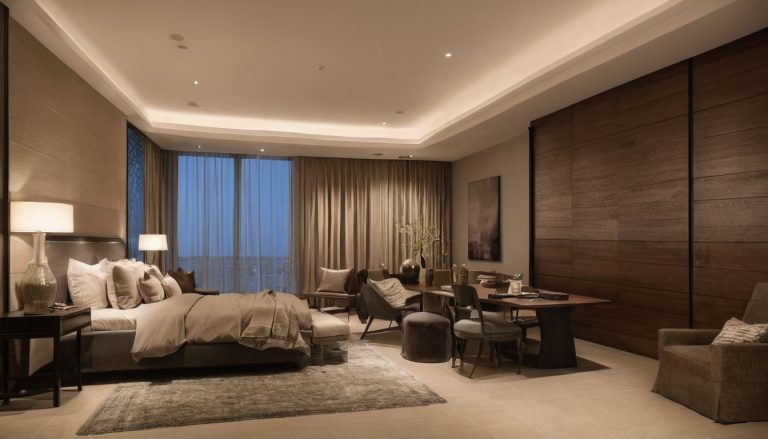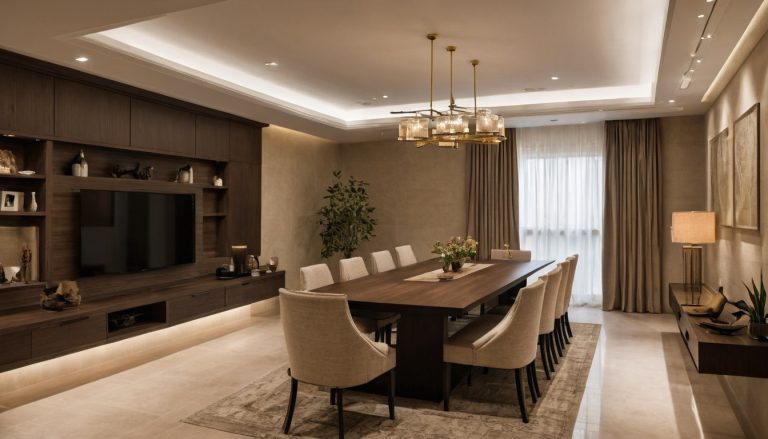
Riyadh Majlis Design Used Acoustic Tests to Keep Speech Clear Behind Decorative Finishes
Carved timber panels, stone flooring and upholstered seating can make a majlis look acoustically soft, yet conversation may still blur across opposing seats. In this illustrative planning scenario, measurement becomes a finish-release condition because approving the wrong assembly can create rework, delay and disputed responsibility.

Riyadh Majlis Design Used Acoustic Tests to Keep Speech Clear Behind Decorative Finishes shown as an editorial reference for proportion and finish coordination.
Should a Riyadh majlis be acoustically tested before decorative finishes are approved?
A private Riyadh majlis should be tested before finish approval whenever its volume, reflective surfaces, ceiling form or seating distances create a credible risk of persistent reverberation. Visual softness is not reliable evidence of speech clarity.
Which majlis warning signs justify measurement rather than visual judgement?
Room reverberation can smear speech cues over time, while reflected sound can partly mask direct conversation. Published room-acoustics guidance identifies reverberation and background noise as important measurements when assessing spaces used for speech communication.
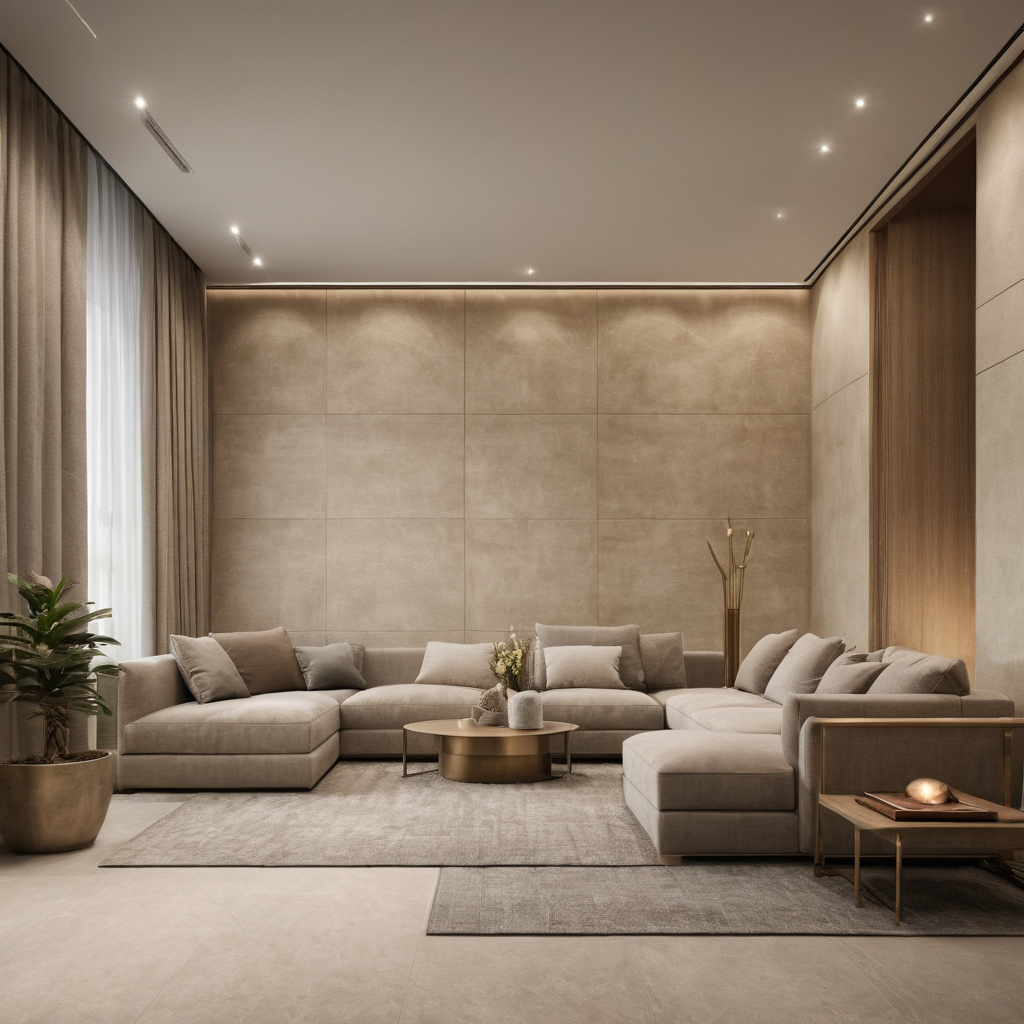
Should a Riyadh majlis be acoustically tested before decorative finishes are approved shown as a planning reference for layout, scale, and material decisions.
- Reflective geometry: extensive glazing, stone floors, parallel walls, domes, coffers or connected openings allow sound to circulate.
- Long conversation paths: family members must speak across opposing seating runs without amplification.
- Unconfirmed soft finishes: curtain fullness, rugs, upholstery construction or furniture quantities remain undecided. Procurement should also check seating beyond the showroom display.
- Walkthrough concerns: the family reports echo, raised voices or listening fatigue, even after allowing for temporary doors and incomplete furnishings.
The review file should include dimensioned plans, sections, room volume, connected openings, seating and the current finish schedule. Stone maintenance assumptions also matter. The Natural Stone Institute warns that abrasive powders and creams can scratch natural stone surfaces, so a later maintenance-driven finish change should not bypass design review.
Who should agree the acoustic acceptance criteria for a private Riyadh majlis?
The authorized family representative, interior designer, acoustic adviser, contractor and specialist installer should freeze the use case before releasing panels, ceilings, curtains or furniture. The brief must record expected occupancy, conversation pattern, amplification status, door and curtain positions, HVAC operation and final approval authority. Families can first define the majlis use and approval scope.
No universal residential target should be assumed. A project-specific objective and repeatable test condition must be documented before baseline testing establishes what the room needs.
Baseline acoustic testing establishes what the Riyadh majlis actually needs
Baseline testing must document the majlis as found, identify the measurement method and separate room decay from background noise or construction activity. The source positions, microphone positions and room condition must be recorded well enough to repeat the test after completion.
How should reverberation be measured in an occupied-use majlis?
Reverberation occurs when repeated reflections linger within room boundaries. Background noise can mask speech independently. The acoustic consultant should therefore issue a repeatable field procedure rather than one unexplained summary reading.
- Record banded results and any speech metric, including its calculation method and limitations.
- State the measurement procedure and selected decay descriptor.
- Mark source and microphone positions on the seating plan, with averages and measurement uncertainty.
- Log occupancy, doors, curtains, HVAC, active construction and relevant access restrictions.
- List instrument details, serial numbers, calibration certificates and field checks.
- Identify the applicable provisions of the verified current edition of ISO 3382-2, or justify another method.
The approved room-acoustics measurement tutorial describes assessment of reverberation and background noise, along with methods for evaluating insulation provided by room barriers. If sound transfer through doors or partitions is part of the family concern, it should be assessed separately rather than confused with internal reverberation.
The majlis acoustic target must match conversation, occupancy, and finish conditions
The consultant and authorized family representative should approve a target based on room volume, unamplified conversation, occupancy and furnished condition. The record must state whether acceptance applies when the majlis is empty, partly occupied or fully occupied. Once that basis is fixed, the next question is whether ornament can conceal a complete, test-supported acoustic assembly.
Concealed acoustic layers can preserve an ornate majlis interior when the full assembly is tested
An ornate majlis can conceal absorption behind perforated timber, fabric panels, decorative screens or ceiling features, but approval must cover the complete assembly. Facing openness, cavity depth, absorber, frame, joints, edges and mounting conditions all affect performance.
Which decorative majlis finishes can function as acoustic assemblies?
Marked-up elevations and ceiling drawings should locate every treatment zone and state its net area. Perforated timber requires evidence for its opening pattern, backing and cavity. Fabric panels require the approved fabric, frame, absorber and any membrane. Curtains require defined fullness, lining, track and air gap, while upholstered seating requires confirmed construction and quantity.
Material review must also cover fire, smoke, cleanability, durability and indoor air. The U.S. Environmental Protection Agency identifies building materials and furnishings as indoor VOC sources. The EPA also advises prompt correction of condensation and damp areas as part of mold prevention.
A product rating cannot be separated from its mounting condition
An isolated absorption value in a quotation is insufficient. Procurement should request the original laboratory report, verify the stated test method and compare the tested specimen, frequency results, cavity and mounting with the site detail. Reduced cavities, blocked perforations, added membranes, new fabrics or substituted absorbers require written acoustic reassessment before commercial approval.
Majlis acoustic approval should control samples, quotations, lead times, and substitutions
Acoustic approval should become a procurement hold point before purchase orders are released. The family can approve appearance, while the consultant and contractor confirm the concealed build-up, performance evidence, fire documents, interfaces and responsibility for local or imported substitutions.
What must be written into the acoustic package purchase order?
The purchase order should identify the assembly code, approved drawings, quantities, tolerances, finish sample and complete build-up. Quotations should separate facing, absorber, framing, installation, mock-ups, testing and remedial work.
- Submittal hold point: approve supplier data, laboratory reports, fire documents, shop drawings, warranties and sample revisions.
- Production hold point: the family approves appearance, the acoustic consultant accepts the assembly and the contractor confirms dimensions.
- Delivery hold point: procurement verifies damage records, storage, lifting access and delivery-gate booking.
- Closure and testing hold points: inspect concealed work before covering, then complete final testing and closeout.
The programme should distinguish Riyadh workshop production from imported manufacturing, shipping, port clearance and local delivery. Gate restrictions, installation sequence and project-adopted Ramadan hours belong in the schedule. If lighting performance is included in the same procurement package, the specification must identify the qualifying product basis: ENERGY STAR states that qualified LED lighting uses at least 75 percent less energy and lasts up to 25 times longer than incandescent lighting.
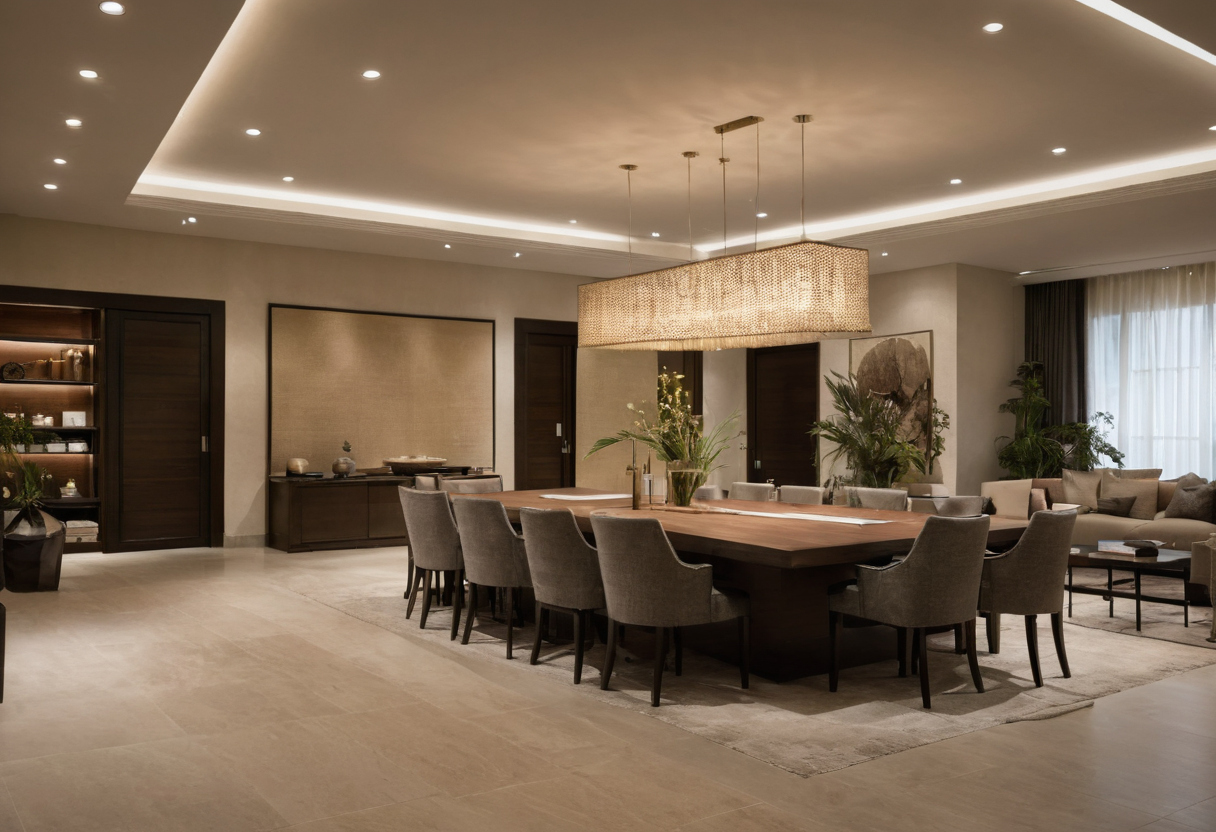
Majlis acoustic approval should control samples, quotations, lead times, and substitutions shown with floor, wall, and fixture relationships visible.
How should several family decision-makers approve one majlis finish?
A named family representative should consolidate aesthetic comments. The approval matrix should assign aesthetic, acoustic, technical, commercial and programme authority. Any later change to fabric, perforation, cavity, absorber or dimensions must trigger acoustic, aesthetic, fire, price and programme reassessment.
Installation details determine whether the completed majlis matches the acoustic design
The majlis will not achieve the predicted result if absorptive cavities are compressed, bridged, covered or reduced around services. Concealed-work inspections must verify each layer before closure.
Which concealed acoustic defects require correction before wall or ceiling closure?
- Confirm framing, cavity depth, absorber type, thickness, joints, edges and penetrations.
- Reject blocked perforations, compressed insulation, damp material, missing sections and undocumented substitutions.
- Record product codes, batch details, location, inspector, corrective work and closure release.
- Photograph compliant and rejected work before decorative faces conceal it.
Lighting, HVAC, and access panels must not erase the planned acoustic area
The reflected ceiling plan should deduct downlights, diffusers, speakers, detectors, curtain tracks and access hatches from the gross treatment area. The site team should coordinate the majlis ceiling before closure and obtain approval for replacement treatment where required. Research also shows that talkers can change vocal intensity and speech rate between rooms with different size or reverberation, so raised voices should not be treated as a substitute for correction.
Post-completion testing proves whether the furnished majlis is ready for handover
A Riyadh majlis should be retested under conditions that permit a fair comparison with the baseline and agreed acceptance state. Final readings must connect to the installed assemblies, curtains, rugs, seating, doors and mechanical services.
Before-and-after majlis results are valid only when test conditions are disclosed
The completion report should place baseline and final results side by side using the agreed method, bands, positions, instruments, calibration records and reporting format. It should disclose occupancy, furniture, curtain and door positions, HVAC operation, construction state, uncertainty and every material difference between tests.
The acoustic consultant should explain whether the project-specific criterion was met and whether changed conditions influenced the result. Punch-list investigations, corrective work, retest records and authorized family acceptance should remain attached.
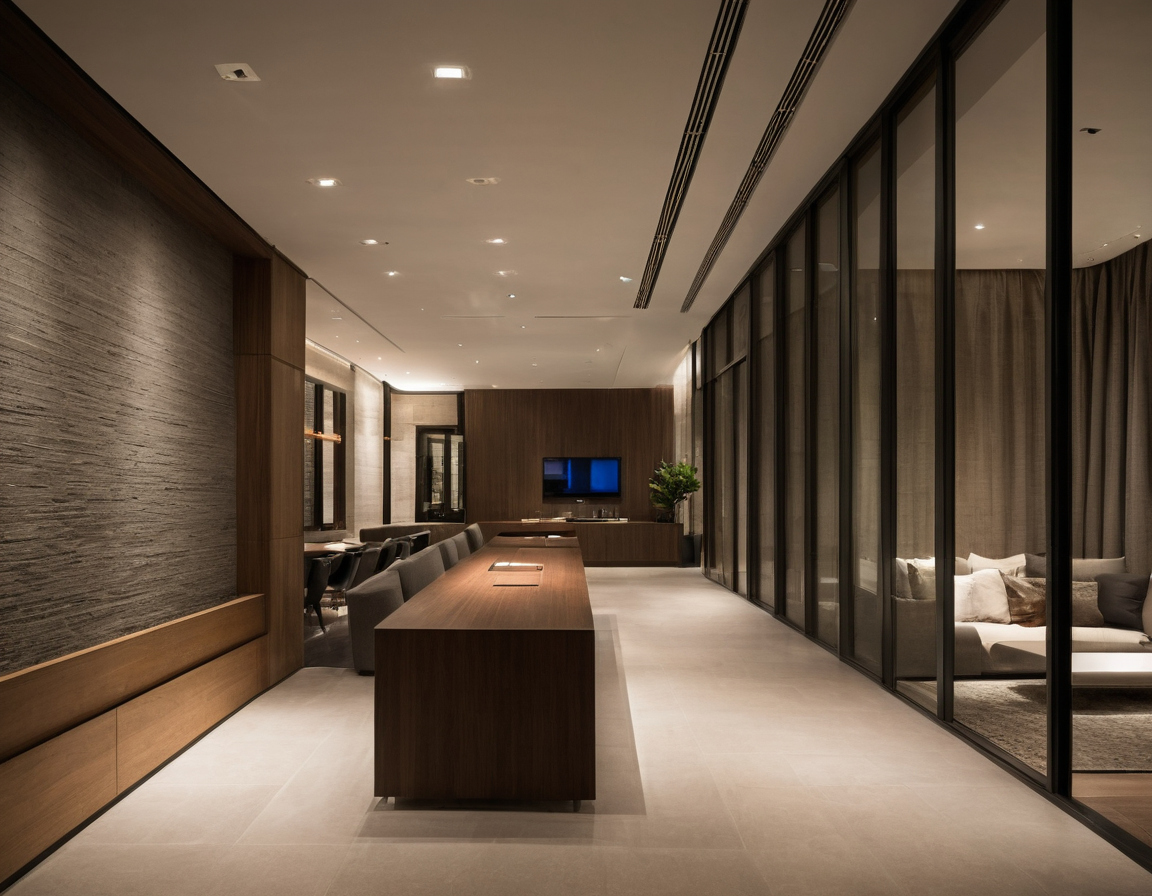
Post-completion testing proves whether the furnished majlis is ready for handover shown as an editorial reference for proportion and finish coordination.
What belongs in the majlis acoustic handover file?
The file should contain the final report, signed acceptance, as-built details, concealed-work photographs, installed-product schedule, laboratory and fire documentation, warranties and replacement requirements. Maintenance notes should prohibit blocked perforations, unapproved repainting, changed fabrics and new penetrations without review.
For natural stone, the Natural Stone Institute recommends neutral cleaners, stone soap or mild liquid detergent with warm water. Where replacement coatings or adhesives emit volatile organic compounds, the U.S. Environmental Protection Agency recommends increased ventilation during use.
Riyadh majlis acoustic planning questions
The practical answers depend on the documented use case and complete installed assembly, not appearance or a supplier’s headline rating.
Can curtains and upholstered seating provide enough acoustic treatment for a Riyadh majlis?
Possibly, but only when their construction, quantity and position are confirmed and calculations or measurements support the result. Undecided furniture should not carry the entire acoustic strategy.
What is an appropriate reverberation target for an unamplified family majlis?
The acoustic consultant should define a project-specific target based on volume, conversation distances, occupancy and furnished condition. A universal residential target should not be assumed.
Can acoustic material be hidden behind decorative timber or fabric wall panels?
Yes, provided the facing, openings, cavity, absorber, edges and mounting match the approved and tested assembly.
When should a majlis be tested?
Test before finish release to establish the baseline and after furnishing to verify the agreed acceptance state. Both reports must disclose enough detail for a fair comparison.
Does changing a perforated panel, fabric, cavity depth, or absorber require acoustic reapproval?
Yes. Each change can alter the assembly’s performance and should trigger documented acoustic, aesthetic, fire, commercial and programme review. Do not release decorative packages until the use case, test basis, complete assembly, inspection points and repeatable final test are documented.